


Building Stronger Health Systems Through African Scientific Leadership
Across Africa, epidemics do not unfold in laboratories. They unfold within complex systems shaped by funding structures, climate shifts, diagnostic capacity, and policy responsiveness. For many young African scientists, the challenge is not only generating data, but ensuring that scientific insight strengthens health systems before failure occurs. Africa CDC reports a 70% decline in health development assistance between 2021 and 2025, placing unprecedented strain on preparedness systems.
Viruses evolve continuously. Under therapeutic and immune pressure, mutations accumulate. Environmental shifts alter vector ecology and influence transmission dynamics. When surveillance systems detect viral changes too late, diagnostics lose sensitivity and treatments become less effective; and national programs absorb the cost. Studies show that inadequate preparedness and delayed genomic detection contributed significantly to the severity of past epidemics, including Ebola in West Africa. These gaps force national programmes to adjust treatment protocols at high financial and operational cost.
For Dr. Alex Durand Nka, a molecular medicine researcher with a PhD in Molecular Medicine and Applied Biotechnology and Head of the Bioinformatics Unit at the Chantal Biya International Reference Centre, this reality defines the purpose of his work. His research focuses on viral evolution; particularly HIV and arboviruses and how genetic variation affects diagnostic accuracy, treatment durability, and epidemic trajectories.
“The accumulation of mutations can compromise molecular diagnostic assays and reduce antiviral susceptibility,” he explains. “If we detect those changes late, the consequences are immediate for both patients and national programs.”
Working in a high-burden setting has made the stakes tangible. But scientific complexity is only part of the story. Structural constraints shape what is possible.
Securing independent international funding remains one of the most significant barriers. Competitive global grants often favor proposals endorsed by well-established institutions in high-income countries. Without those partnerships, even strong proposals face lower success rates. For research areas that depend on continuous genomic monitoring, fragmented funding slows progress and limits the ability of African scientists to independently lead large-scale initiatives.
“For many young African scientists, the issue is not capacity,” Nka reflects. “It is access to sustained funding, to decision-making spaces, and to platforms where research priorities are shaped.”
A turning point came through the African STARS Fellowship, a leadership and research development programme designed to strengthen African scientists’ capacity to influence systems, not just produce data. The programme is implemented by the Centre for Epidemic Response and Innovation (CERI) at Stellenbosch University and the Center for Africa’s Resilience to Epidemics (CARE) at the Institut Pasteur de Dakar in partnership with the Mastercard Foundation.
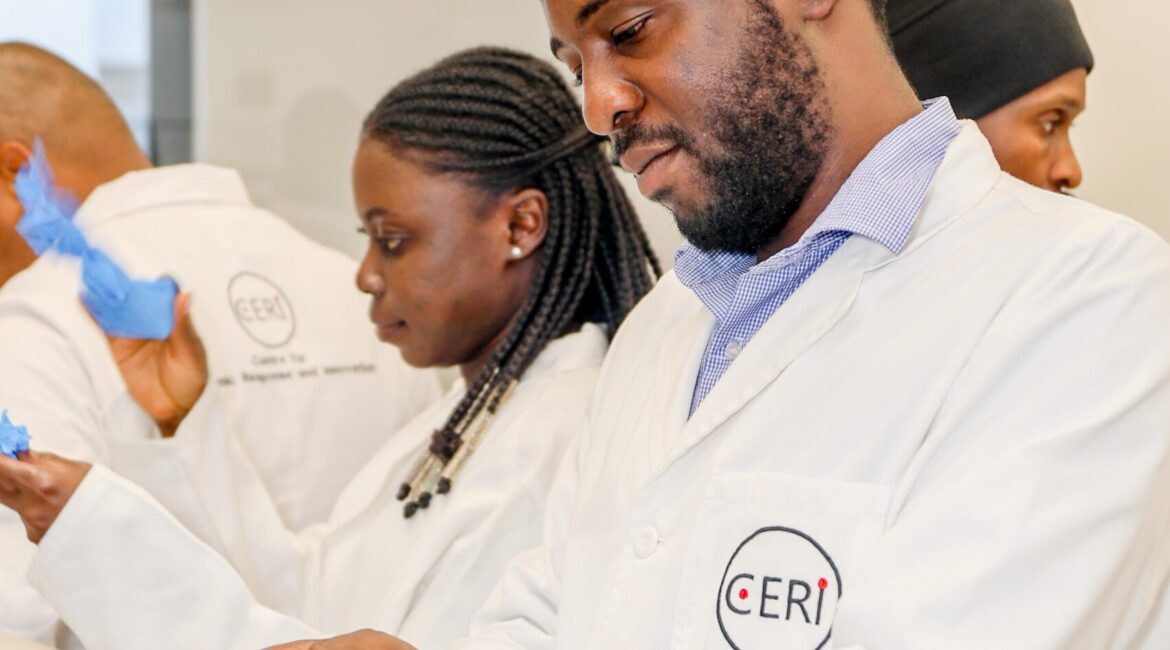
The fellowship includes four training tracks. Nka was enrolled in the Advanced and Translational Training (ATT) Fellowship, a four-month intensive programme focused on advanced genomics for public health, genomic diagnostic design, and vaccine manufacturing. Designed for early-career scientists seeking specialized technical training, it also integrates leadership development, grant and financial management and communication of science. He spent approximately four months in South Africa during this period, engaging in advanced mentorship and cross-institutional collaboration.
“The fellowship helped me move from conducting research to thinking about systems,” he says. “Scientific excellence alone is not enough. We must understand strategy, influence, and partnerships if we want our work to shape decisions.”
Following the fellowship, the changes were deliberate. He contributed to strengthening his institutional visibility through structured scientific communication, generating direct engagement from international funders. He contributed to positioning his institution within an international climate research consortium, linking viral evolution research with climate-health discussions and expanding collaborative pathways.
For Nka, the shift was also aspirational.
“I want to see African institutions lead research agendas that are relevant to our realities,” he says. “We should not only contribute data. We should define priorities.”
He is clear about what needs to change. African institutions require predictable, long-term investment rather than short funding cycles that interrupt surveillance platforms just as they mature. Young scientists need structured mentorship and equitable access to competitive funding mechanisms. Funders must recognize that investing in African-led genomic surveillance is foundational to global health security.
“If surveillance is externally driven and intermittently funded, health systems will always react after failure,” he explains. “When it is locally anchored and sustainably financed, it becomes protective.”
Why this matters: Patterns of viral evolution and emergence are shifting, and Africa is disproportionately affected by climate-linked disease emergence. Without early detection and African-led genomic surveillance, health systems will continue responding after diagnostic or therapeutic failure, at significant human and economic cost.
What sustains him is the understanding that incremental improvements in surveillance systems translate into lives protected. His long-term vision is an Africa where research ecosystems are locally defined, sustainably funded, and institutionally anchored, capable not only of responding to epidemics, but anticipating them.
The work of researchers like Nka makes one point clear. Strengthening Africa’s scientific leadership is not optional. It is the foundation for resilient, future-ready health systems.